


The Cloud Native Infrastructure AI Agents Need to Scale
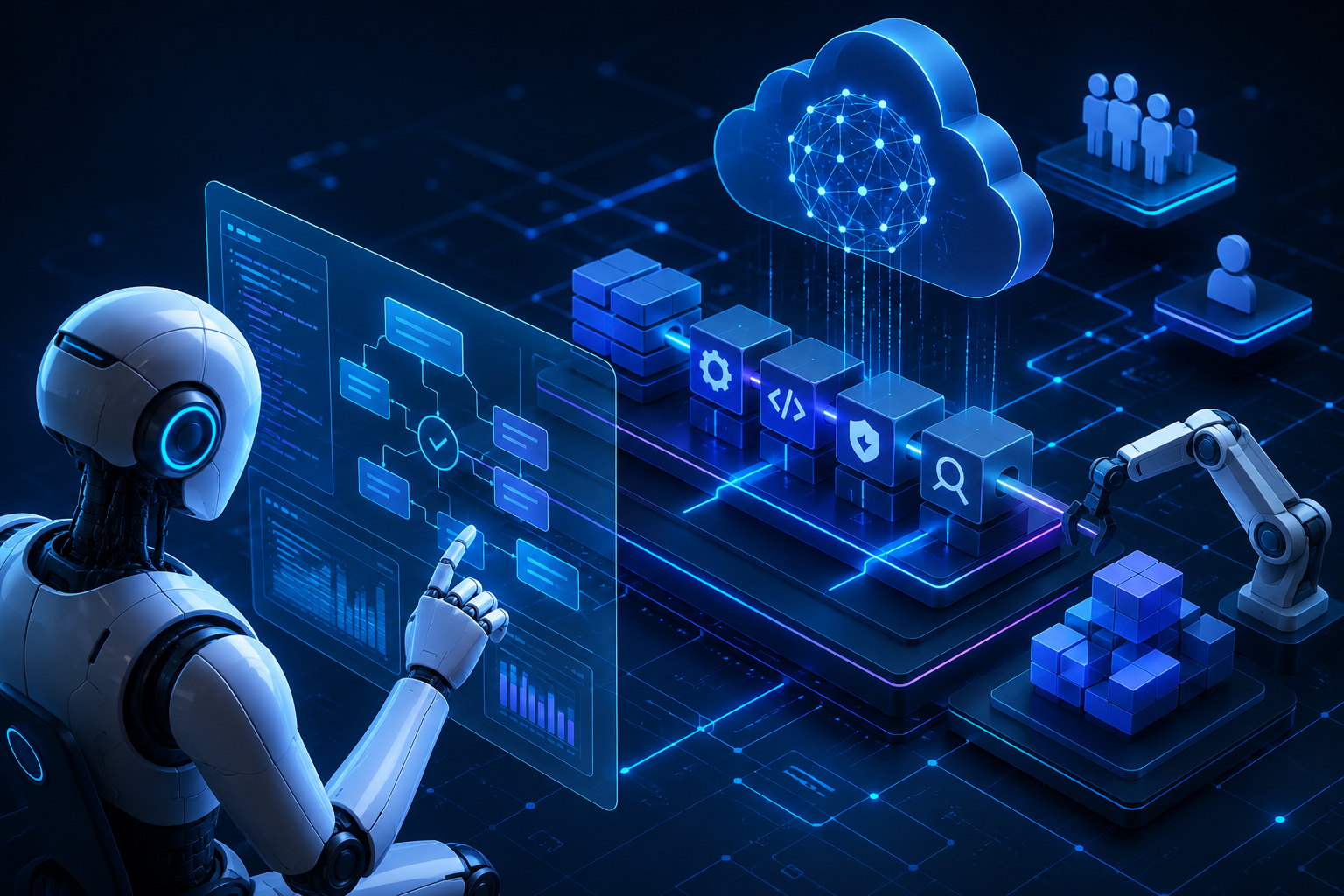
The move in AI agents towards more complex agents that do multi-step operations, call on other services and APIs, adapt to the environment, and take action changes the problem of infrastructure itself. The central question isn’t just how to deploy an AI model, but which kind of infrastructure is capable of containing, authorizing, observing, and scaling such autonomous operation.
Cloud-native infrastructure is the answer. Kubernetes, containerization, orchestration, workload identity, policy enforcement, observability, and platform engineering offer a lot of the primitive components needed to build dynamic software. The difficulty lies in adapting those components to workloads that vary in their duration, resource needs, and behavior.
AI Agents Create a Different Infrastructure Challenge
Conventional applications usually expose defined services and follow relatively bounded execution paths. Agents are more dynamic. They may choose different tools from one request to the next, make several API calls, retry based on intermediate results, delegate subtasks, or remain active while waiting for another system.
That variability creates infrastructure questions that deployment automation alone cannot answer: which identity should an agent use, how much compute should a task receive, and how can operators reconstruct a specific outcome?
Cloud native work increasingly treats agents as workloads that need identity, resource controls, security boundaries, and observability.
Elastic Infrastructure for Unpredictable Workloads
Agent workloads can vary sharply. A simple request may require a few model and tool calls; a complex task may trigger a longer execution chain. Infrastructure therefore needs elastic capacity instead of provisioning permanently for theoretical peak demand.
Kubernetes provides core mechanisms for this. Horizontal Pod Autoscaling can adjust replicas according to demand and metrics, while resource requests and limits establish resource boundaries. Kubernetes also supports extended resources for specialized hardware, allowing platforms to account for nonstandard capacity.
For agents, scaling should consider queue depth, task backlog, execution latency, tool-call volume, and accelerator utilization alongside CPU and memory. Short-lived agents may also fit batch execution better than permanent services; Kubernetes Jobs support work that runs to completion, can be retried, and can execute in parallel.
Identity Becomes a Runtime Primitive
The independent agent can interact with any repository, database, SaaS applications, cloud APIs, or deployment control tools. For that, an identity is needed that can authenticate and authorize independently of the human user who has triggered the process.
ServiceAccounts are the workload identities for Kubernetes. The permissions are defined via Roles and ClusterRoles. Least privilege is recommended in the Kubernetes official documentation, and the usage of wildcard permissions is discouraged..For larger environments, workload identity systems such as SPIFFE provide portable cryptographic identities for dynamic workloads. Its Workload API allows running processes to obtain verifiable identities for authenticated communication, reducing reliance on long-lived embedded credentials.
Isolation and Policy Must Follow the Agent
Identity alone is not enough. An agent can be properly authenticated yet have too much authority.
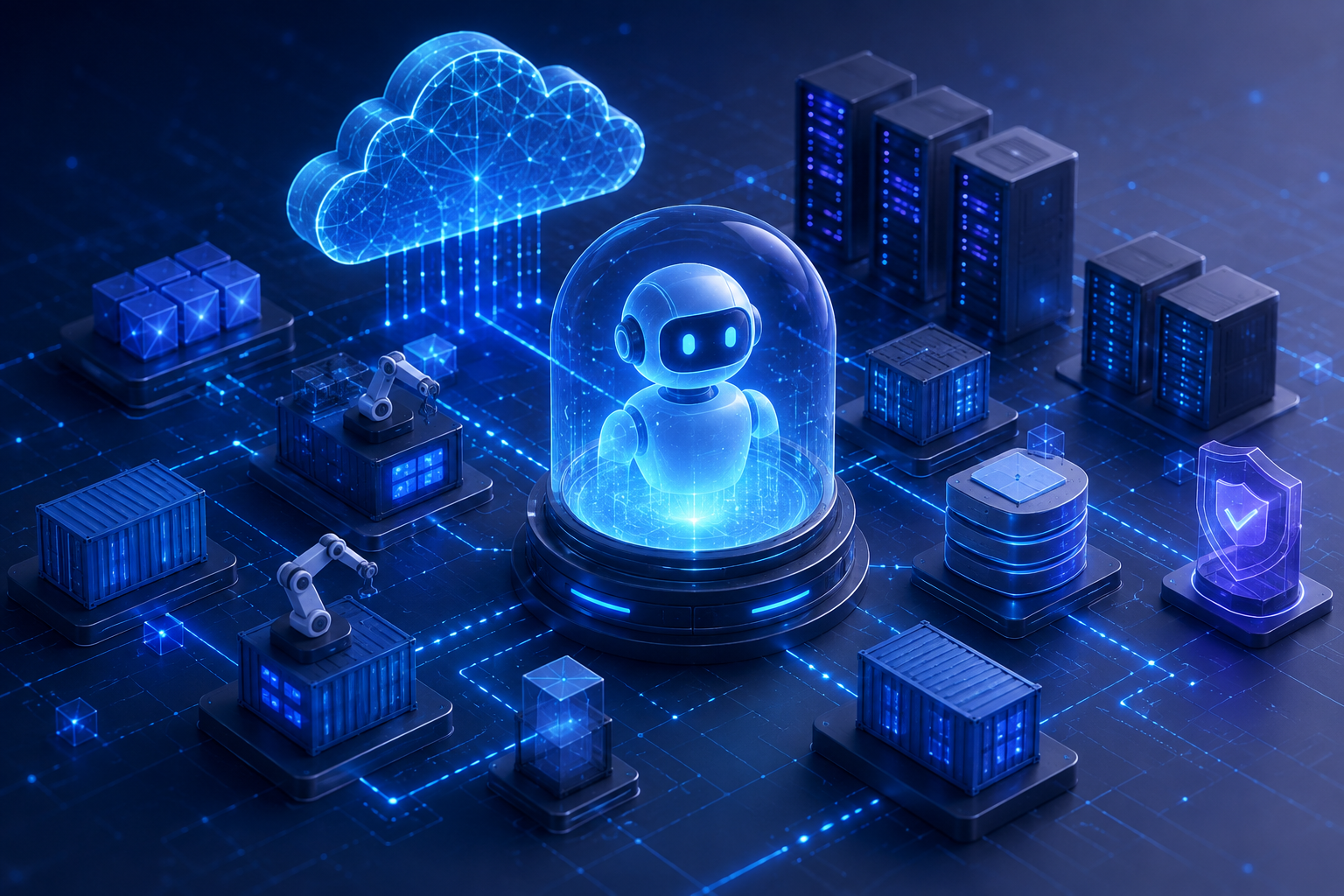
Cloud-native systems require layered isolation of workload boundaries, network controls, admission controls, secrets management, and execution environments. With Kubernetes NetworkPolicy, it’s possible to set restrictions on ingress and egress traffic for some chosen Pods, thus establishing communication boundaries explicitly.
Policies need to indicate which commands agents are allowed to invoke, where they are permitted to connect, what objects they may create, and which actions will require permission. The purpose isn’t to secure the model but to limit its authority.
Observability Must Capture the Execution Chain
Traditional service health checks determine whether a system is running normally. However, agentic operations demand more information. What operation was attempted? Which tool was invoked? Which service answered? How much time was taken by each step? Where did it go wrong?
OpenTelemetry offers a cross-vendor solution to instrument traces, metrics, and logs in heterogeneous systems.
The important part is correlation, such that a task must be traceable throughout model calls, tool calls, queues, services, and spawned processes. Without correlation, one failed run will become a set of unrelated infrastructure events.
Governance and Cost Controls Move Into the Platform
Autonomous systems can turn small decisions into significant infrastructure consumption. Excessive task launches or expensive compute choices can create cost and reliability problems.
Platform teams therefore need controls for concurrency, quotas, execution time, model selection, accelerator usage, and cross-team resource consumption. Kubernetes resource requests, limits, and quota mechanisms can form part of that control plane.
Governance also requires attribution. Agent identities, policy decisions, tool calls, deployment changes, and resource creation should be tied to a specific workload and execution context, creating an operational record for incident response, compliance, and cost accountability.
Platform Engineering Becomes the Control Plane
The infrastructure challenge is ultimately a platform engineering challenge. Application teams should not assemble identity, observability, networking, policy, accelerator scheduling, and guardrails independently for every agent.
Internal developer platforms can expose these capabilities as standardized building blocks: approved agent templates, workload identities, policy profiles, telemetry defaults, resource budgets, secure tool gateways, and controlled execution environments. CNCF work describes this evolution as platform engineering expanding from serving human developers to managing applications, resources, and AI agents together.
The important principle is consistency. Agents should use the same foundational controls as other production workloads rather than receiving a separate infrastructure stack with weaker visibility or governance.
Cloud Native Is the Foundation, Not the Agent
Autonomous agents do not replace cloud native infrastructure. Instead, they highlight the value of infrastructure capabilities that are mature.
Production platforms will be composed of elastic scheduling, controlled execution, least privilege identity, isolation, policy enforcement, observability, and governance. Kubernetes provides much of the underlying plumbing, but one would be wise not to confuse it for an autonomous agent platform. There are also recent observations from the world of cloud native technologies that indicate that Pod-based lifecycle management might not be appropriate for short-lived, bursty, or multistage autonomous agents.
The key distinguishing factor will be whether the platform can enable independent executions to run with restricted authority, quantified consumption, traceable behavior, and consistent failure patterns.
It is therefore safe to say that cloud native infrastructure is the execution platform for the agentic age: not an alternative to autonomous software, but its operational underpinning.