





How Hospitals and Clinics Build Public Trust Through PR
In today’s digital world, hospitals are not considered successful solely by professional workers or good treatment; they are also determined by their trust, transparency, reputation, and loyalty toward patients.
What is healthcare public relations?
Healthcare public relations shapes how healthcare organisations can build trust and communicate with the people they serve. Healthcare PR employs two primary strategies: proactive and reactive approaches.
Proactive PR: This involves taking initial steps to your organisation’s narrative before any issues arise.
Reactive PR: This involves responding quickly to an unexpected issue or crisis after it happens.
There are some types of healthcare PR work:
Stakeholder Engagement: Targeted communication with various stakeholders, including board members, investors, and regulatory bodies (like the FDA or local health authorities), to maintain transparency and alignment.
Crisis Management/Communication: High-stakes, time-sensitive communication during emergencies such as data breaches, service disruptions, or public health crises. The goal is to provide timely, factual, and empathetic information to maintain public trust and control the narrative.
Patient Advocacy and Education: Creating communication strategies that advocate for patient needs and educate the public on managing conditions, using services appropriately, and accessing care.
Media Relations: Building relationships with journalists and media outlets (print, broadcast, and digital) to secure positive earned media coverage, manage inquiries, and disseminate important health information.
How Healthcare Public Relations Builds Trust
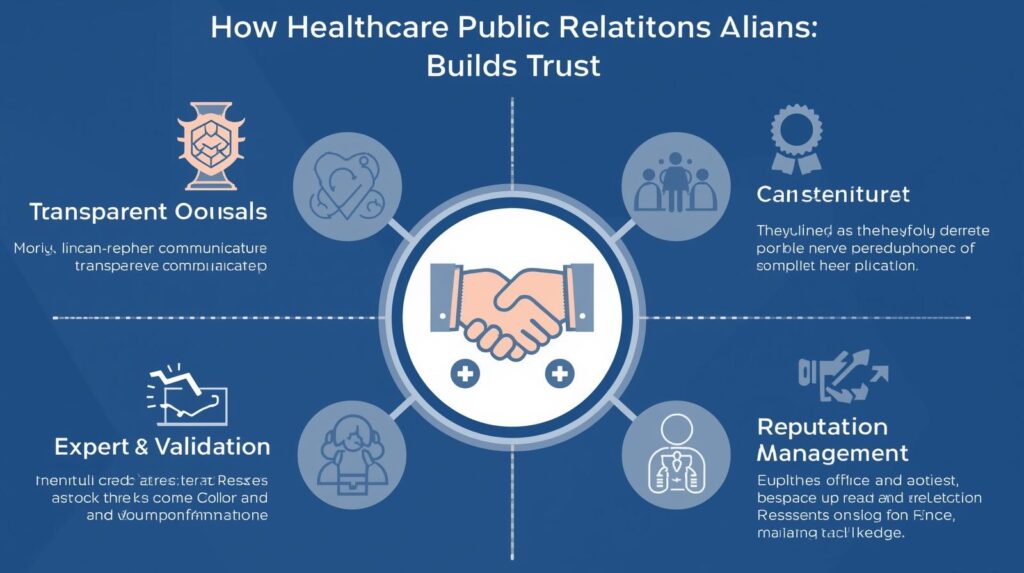
Trust is central to effective healthcare public relations. In an industry where misinformation can have serious consequences, PR communications must be grounded in accuracy, transparency, and ethical responsibility. Healthcare PR strengthens trust through the following core practices:
Transparent and consistent communication
Open, clear, and regular communication regarding treatments, risks, policies, and innovations enhances organisational credibility. Providing timely updates on medical advancements, regulatory changes, and public health guidance reinforces confidence among patients, stakeholders, and the wider public.
Expert-validated messaging
Healthcare PR relies on close collaboration with medical professionals, researchers, and regulatory authorities. Ensuring that all messaging is scientifically sound, evidence-based, and ethically reviewed safeguards accuracy and reinforces public trust.
Meaningful community engagement
Engaging directly with communities through health education initiatives, public forums, and patient experience programs builds stronger relationships. Encouraging two-way communication and addressing public concerns demonstrates accountability and commitment to patient-centred care.
Reputation management and misinformation control
Proactively addressing inaccuracies, correcting misinformation, and maintaining a responsible digital presence are essential to preserving institutional trust. Continuous monitoring of public sentiment and strategic media engagement support long-term reputational integrity.
How Healthcare Public Relations Differs from Traditional PR
While traditional public relations primarily focuses on brand visibility and audience engagement, healthcare PR operates within a highly regulated environment and requires a higher standard of ethical oversight.
Key distinctions include:
- Regulatory compliance – Healthcare PR must follow strict regulations to safeguard patient privacy and data.
- Ethical and accurate communication – All claims must be scientifically validated and free from misleading or exaggerated language
- Collaboration with medical experts – PR teams work closely with clinicians, researchers, and regulatory bodies to ensure clarity and credibility.
- Crisis communication – During public health emergencies, healthcare PR teams often coordinate with government agencies to deliver accurate, timely information and counter misinformation
Key Elements of an Effective Healthcare Public Relations Strategy
Healthcare PR professionals play a critical role in translating complex medical information into clear, trustworthy messaging. Whether managing institutional reputation, promoting research outcomes, or navigating crises, a structured and compliant strategy is essential.
1. Trust and Credibility
An effective healthcare PR strategy is built on transparency and ethical communication. Clear, patient-focused messaging helps prevent misinformation and fosters confidence. All claims should be supported by reputable sources, with risks and limitations communicated openly and responsibly.
Healthcare PR professionals act as intermediaries between medical experts and the public, ensuring accessibility without compromising accuracy.
2. Digital PR and Social Media in Healthcare
Digital channels enable healthcare organisations to educate and engage audiences at scale. Blogs, videos, podcasts, and infographics are widely used to communicate preventive care guidance, treatment innovations, and health education initiatives.
Healthcare brands that share patient stories, expert insights, and educational content can humanise their communications and strengthen public connection. However, digital engagement must be carefully managed to ensure compliance with privacy regulations and data protection standards.
Active monitoring and prompt correction of misinformation are critical to maintaining public safety and trust in digital environments.
3. Media Relations and Thought Leadership
Healthcare media relations are essential for disseminating accurate information and establishing organisational authority. Through press releases, expert interviews, and media briefings, healthcare organisations can communicate medical breakthroughs, policy developments, and public health initiatives effectively.
Thought leadership further enhances credibility. Healthcare executives, clinicians, and researchers strengthen their professional standing by contributing opinion articles, participating in conferences, and engaging in expert panels within reputable industry forums.
4. Crisis Communication and Reputation Management
Healthcare organisations must be prepared to respond swiftly and transparently during crises. Delayed or inaccurate communication can significantly undermine public trust.
A robust crisis communication framework includes predefined response protocols, designated spokespersons, and clear communication channels. Ongoing monitoring of media coverage and public sentiment enables early identification of potential risks and informed response planning.
Steps to Developing an Effective Healthcare PR Campaign
1. Define key messages and target audiences
Clearly identify the core messages to be communicated, whether related to patient care, medical innovation, or public health initiatives. Tailor messaging to specific audiences, including patients, healthcare professionals, regulators, and investors.
2. Align PR planning with regulatory requirements
All communications must comply with applicable healthcare regulations and ethical standards. Collaboration with legal and compliance teams ensures messaging is accurate, responsible, and legally sound.
3. Select appropriate communication channels
A balanced mix of traditional media and digital platforms maximises reach while maintaining credibility. Channel selection should be driven by audience behaviour and communication objectives.
4. Monitor performance and evaluate impact
Measure success using key performance indicators such as media coverage, audience engagement, website traffic, and sentiment analysis. Continuous evaluation supports strategic optimisation.
5. Utilise professional PR tools
PR platforms such as Prezly support efficient media outreach, content management, and performance tracking. Centralised tools enhance collaboration, ensure consistency, and improve responsiveness to media inquiries.
Should You Engage a Healthcare PR Agency?
Healthcare PR involves complex regulatory, reputational, and operational challenges. Engaging a specialised healthcare PR agency can provide strategic expertise and operational support.
Roles of a Healthcare PR Agency
A healthcare-focused PR agency offers industry-specific knowledge and typically provides:
- Media relations and press coverage
- Crisis communication and reputation protection
- Thought leadership and executive positioning
- Patient, stakeholder, and investor communication
- Regulatory and ethical compliance guidance
Selecting the Right Healthcare PR Agency
When evaluating agencies, consider:
- Demonstrated healthcare industry expertise
- Strong understanding of regulatory environments
- Established relationships with healthcare media
- Proven results supported by case studies
- A strategic, tailored approach rather than generic outreach
Maintaining Strategic Oversight
Even when working with an external agency, maintaining internal oversight of PR activities is essential. PR management platforms such as Prezly enable healthcare organisations to manage media relationships, track coverage, and maintain message consistency.
Whether handled internally or externally, a well-structured healthcare PR strategy ensures credibility, compliance, and sustained public trust.
Conclusion
Healthcare public relations is about building trust. Clear and responsible communication helps healthcare organisations educate, manage crises, and establish lasting credibility in a complex industry.
The most effective healthcare PR strategies strike a balance between proactive storytelling and timely, transparent responses to challenges. Achieving this requires close collaboration with subject-matter experts, strict adherence to regulatory standards, and the use of reliable tools that support efficient, compliant communication.

6ybewu
6dmsxb