





On-Page and Off-Page Optimization: Differences, Strategies, and Tips
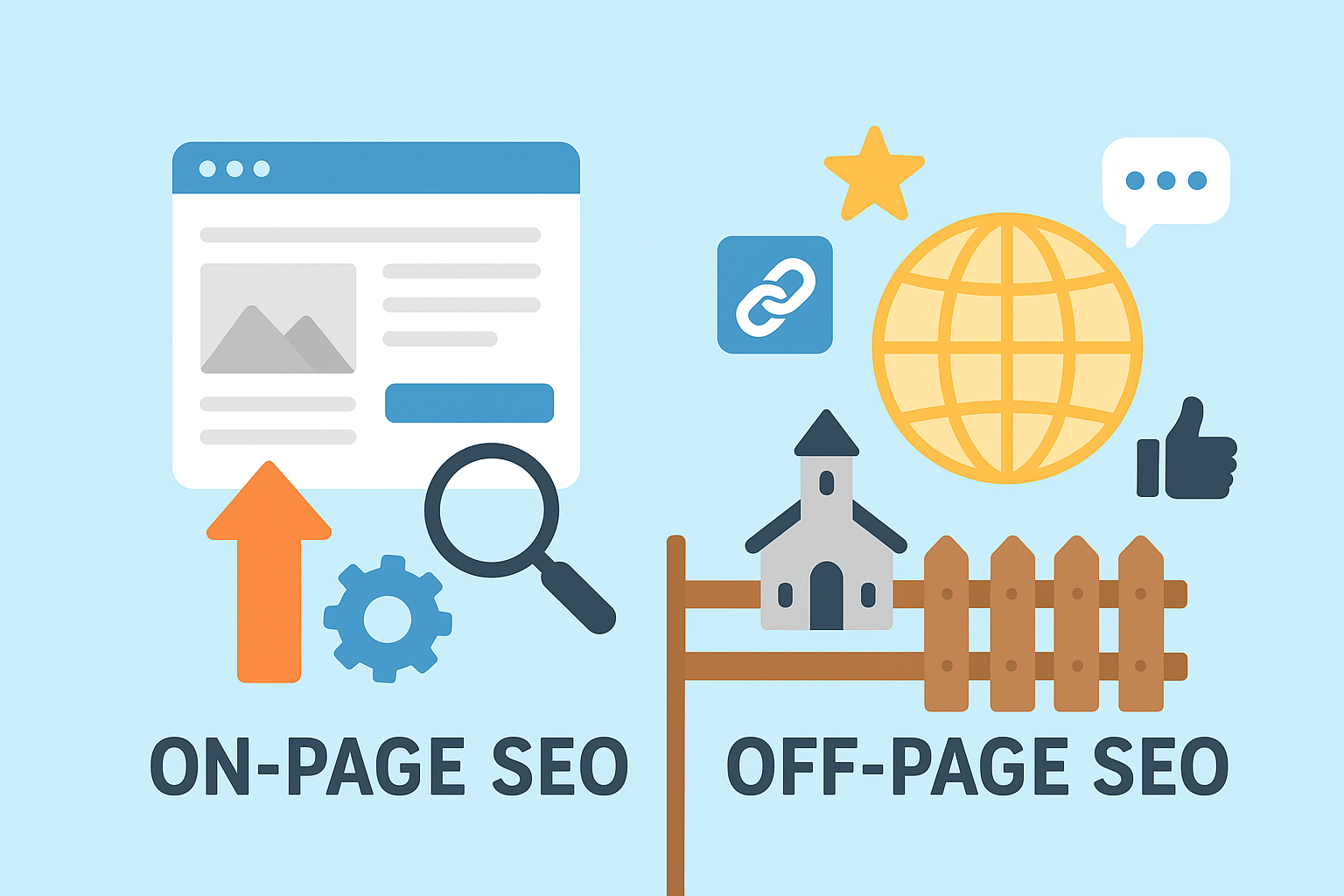
Search Engine Optimisation has been divided into two categories, On-Page and Off-Page SEO. Both are needed for high visibility and rank in blogs and websites, but they’re like two sides of a fence.
On-Page SEO Simplified
On-page SEO involves factors you control directly on your website to improve relevance and user experience. Eg, content optimisation, HTML & technical optimisation, user experience & site performance.
Key factors of On-Page SEO
High-quality, original content: The content must be unique, valuable, and directly relevant to the user’s search query, fulfilling their search intent.
Keyword Optimisation: The strategic and natural placement of target keywords and related phrases within the content, particularly in the first paragraph and throughout the body text, is essential for signalling relevance.
Title Tags: This is one of the most important on-page factors, appearing as the clickable headline in search results. It should be compelling, concise (under 60 characters), and contain the primary keyword near the beginning.
Meta Descriptions: While not a direct ranking factor, a well-written meta description (around 150-160 characters) can significantly improve the click-through rate (CTR) from search results by summarising the page’s value.
Internal Linking: Linking to other relevant pages within your site helps search engines discover content, reinforces site structure, and keeps users engaged longer.
External Linking: Linking out to relevant, authoritative external sources builds credibility and demonstrates that your content is well-researched.
.
Off-Page SEO Simplified
This SEO focuses on external signals to build your site’s authority and reputation across the web. Eg, guest posting, content marketing, brand mentions, and online reviews.
Key factors of Off-Page SEO
Referring Domains: The number of unique websites linking to you indicates broad recognition.
NAP Consistency: For local SEO, maintaining consistent Name, Address, and Phone number (NAP) information across directories such as Google Business Profile, Yelp, and industry-specific sites is crucial.
Social Media Signals: While social shares (likes, comments, etc.) are not direct ranking factors, they play a vital indirect role. High social engagement increases content visibility, drives more traffic to your site, and increases the likelihood of earning natural backlinks and brand mentions.
Content Marketing & Digital PR: Creating high-quality, shareable content (e.g., original research, infographics, videos, guest posts) for external platforms helps you reach wider audiences and naturally attract links and media coverage. This positions you as a thought leader and builds authority in your niche.
Similarities between On-Page and Off-Page SEO
Interdependence and Synergy: On-page and off-page SEO work best when used together. A site with perfect on-page optimisation will struggle to rank highly without off-page authority signals, and a site with many backlinks but poor on-page structure will not perform optimally. They amplify each other’s effects.
The two strategies ultimately serve the same purpose: to improve your website’s ranking on Search Engine Results Pages (SERPs), increase organic traffic, and achieve business goals. They are two complementary parts of a single, unified SEO strategy.
Continuous, Long-Term Effort: SEO is not a one-time project. Both on-page and off-page strategies require consistent maintenance, monitoring, and adaptation to changes in search algorithms and market trends. They are ongoing processes rather than single tasks.
Differences between On-Page and Off-Page SEO

| Aspect | On-Page SEO | Off-Page SEO |
| Location of Effort | Within the website | Outside the website |
| Control | Full control over all elements | Influence, but not direct control |
| Primary Goal | Improve content relevance and user experience | Build trustworthiness and domain authority |
| Time of Impact | Can show faster results (weeks to months) | Takes longer to manifest (months to a year) |
| Impact type | Focus on content relevance | Focus on building credibility |
| Core activities | Content optimisation, technical structure, internal linking | Link building, social media engagement, brand mentions, and reviews |
Furthermore
Both strategies ultimately serve the same purpose: to improve your website’s ranking on Search Engine Results Pages (SERPs), increase organic traffic, and achieve business goals. They are two complementary parts of a single, unified SEO strategy.
A variety of tools can help manage on-page and off-page SEO efforts, ranging from all-in-one platforms to specialized, task-specific tools. Many major SEO suites like Ahrefs and Semrush offer features for both.
On-Page and Off-Page Optimization: Differences, Strategies, and Tips
-
How to build visibility and traffic on your website