



Enhancing Privacy and Compliance Through Confidential Computing in 2026
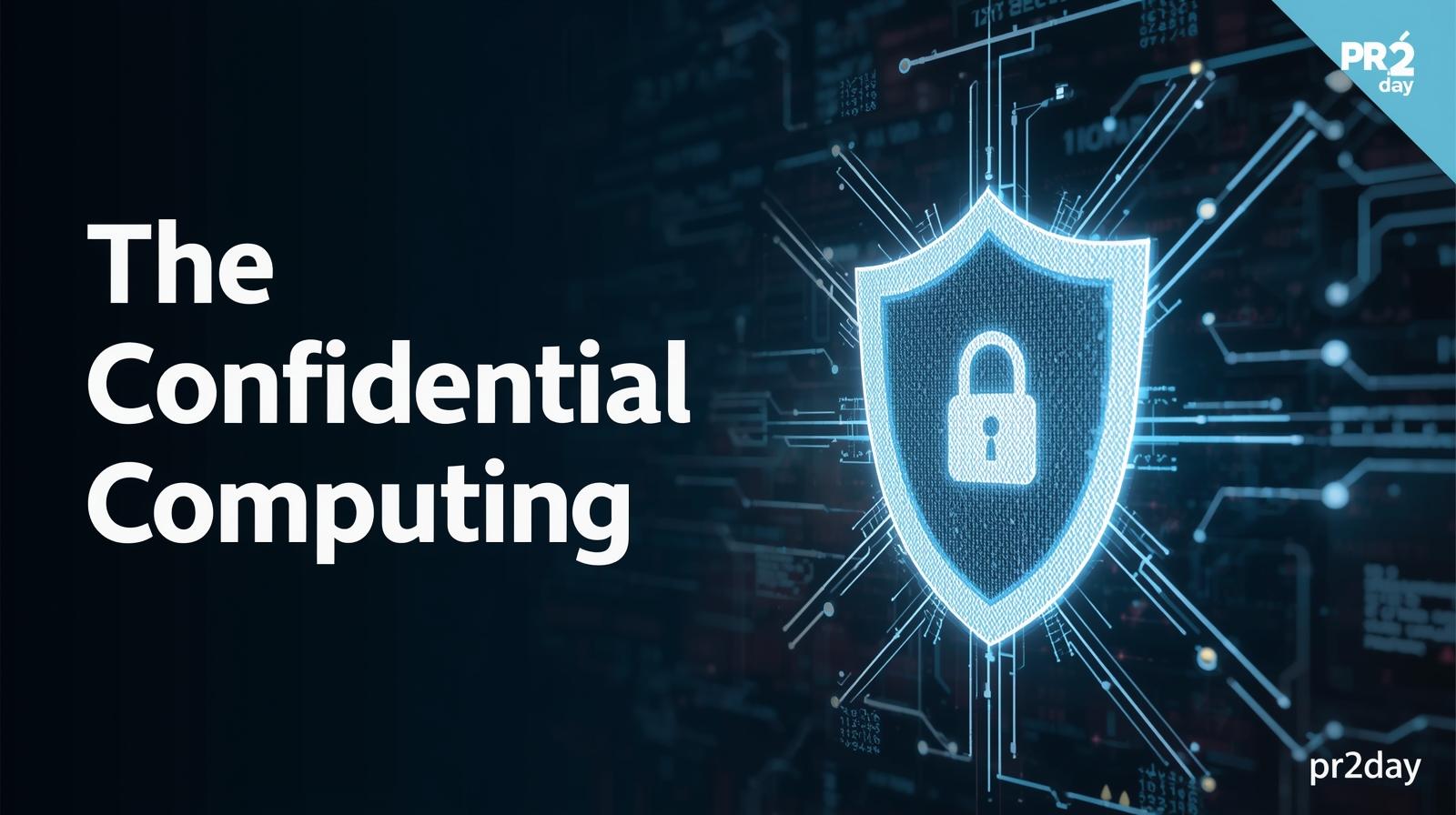
In 2026, confidential computing is becoming mainstream, driven by tighter data privacy regulations (like DORA and GDPR), the need for secure AI development, and increasing enterprise cloud adoption. This technology enhances privacy and compliance by securing data while it is in use through hardware-based Trusted Execution Environments (TEEs)
According to a recent report by Everest Group, the confidential computing market could grow to $54 billion by 2026, signifying its increasing importance in the enterprise security space. This article will delve into the potential for unlocking new opportunities through the latest technological advancements in confidential computing. It will explore how ensuring security can, in turn, unlock innovation in critical industries.
The Traid
The CIA Triad is a foundational model in information security that guides an organisation’s policies and strategies for protecting its data and systems. It stands for Confidentiality, Integrity, and Availability.
Confidentiality
This principle ensures that sensitive information is accessible only to authorised individuals. Measures to ensure confidentiality include data encryption, access controls (such as multi-factor authentication and role-based access), and careful data classification to prevent unauthorised disclosure, whether intentional or accidental. It is about maintaining privacy and secrecy.
Integrity
Integrity focuses on maintaining the accuracy, consistency, and trustworthiness of data throughout its entire lifecycle. This means preventing unauthorised modification or destruction of data. Techniques like hashing, digital signatures, and version control are used to detect any tampering or corruption, ensuring the data remains authentic and reliable.
Availability
This principle guarantees that authorised users have prompt and dependable access to information and systems when required. Approaches to uphold availability include employing redundant networks and servers, conducting regular data backups, implementing comprehensive disaster recovery plans, and safeguarding against denial-of-service (DoS) attacks.
Confidential Computing vs Traditional Computing
Traditional computing leaves data unencrypted in memory during processing, making it vulnerable, while confidential computing isolates and encrypts data during computation in a secure, hardware-based environment.
Traditional Computing Security
Traditional security models focus primarily on protecting data in two states:
Data at rest: Data stored on disks or in databases is protected using encryption.
Data in transit: Data moving across networks (e.g., using TLS/HTTPS) is also encrypted.
However, when data is actively being used or processed in system memory, it must be decrypted, which creates a critical vulnerability. In a traditional system, a compromised operating system (OS), hypervisor, or a malicious system administrator could potentially access this sensitive, unencrypted data. The trust model in traditional computing requires the user to trust the entire software stack and the cloud provider.
Confidential Computing
Confidential computing addresses the traditional security gap by ensuring data remains protected throughout its entire lifecycle, including while in use.
Trusted Execution Environments (TEEs): Confidential computing relies on hardware-based isolated environments within the CPU called Trusted Execution Environments (TEEs), or secure “enclaves”.
Hardware Isolation: The data and code inside the TEE are protected and inaccessible to any other part of the system, including the host OS, hypervisor, and cloud provider administrators. This isolation is enforced at the hardware level, not just by software.
Attestation: The system provides cryptographic proof (attestation) that the workload is running inside a genuine, untampered TEE, allowing the user to verify the security of the environment remotely before sending sensitive data.
Key players driving privacy and compliance innovation
Intel: A leader in confidential computing, Intel develops hardware-based Trusted Execution Environments (TEEs) like Intel® Software Guard Extensions (SGX) and Intel® Trust Domain Extensions (TDX) to protect data while it is in use, which is crucial for secure AI and cloud operations.
Microsoft: Offers extensive confidential computing capabilities within its Azure cloud platform, allowing customers to run sensitive workloads with hardware-level protection.
Google: A key player in cloud privacy, Google has introduced new PETs and works on advanced cryptographic methods, such as better homomorphic encryption transpilers, to safeguard data during processing.
IBM Security: Provides robust data protection solutions, including the Guardium platform for real-time monitoring and encryption, and is involved in scaling privacy-enhancing infrastructure for regulated systems.
AWS (Amazon Web Services): Integrated PETs, such as encryption, tokenisation, and access controls, into its cloud-based services to prioritise data privacy in its vast data protection and security lake services.
Data privacy and compliance through secure collaboration
Secure collaboration relies heavily on Privacy-Enhancing Technologies (PETs), which integrate privacy directly into the design of systems and processes.
Confidential Computing/Trusted Execution Environments (TEEs): This hardware-based approach creates a secure, isolated area (enclave) within a CPU where sensitive data can be processed while remaining encrypted. This protects data even from the cloud provider, system administrators, or the host operating system, closing a critical vulnerability found in traditional computing.
Secure Multi-Party Computation (SMPC): This cryptographic protocol allows multiple parties to jointly perform a computation or analysis on their combined data without any single party ever seeing the others’ raw inputs. This is particularly useful for tasks like fraud detection across banks or collaborative medical research.
Homomorphic Encryption (HE): This advanced form of encryption allows computations to be performed directly on encrypted data, producing an encrypted result that, when decrypted, matches the result of operations performed on the original plaintext. The data remains confidential throughout the entire analysis process.
Federated Learning: In this decentralised machine learning approach, models are trained locally on devices or siloed datasets, and only the model updates (not the raw data) are aggregated centrally. This keeps sensitive data within its original secure environment, ideal for use in mobile AI or healthcare applications.
Data Clean Rooms: These are secure, controlled environments (often powered by the above PETs) where multiple organisations can bring their data for joint analysis under strict, predefined rules. This ensures that only approved, aggregated results leave the clean room, protecting individual data points and proprietary information.
conclusion
Confidential computing is poised to redefine the landscape of data privacy and compliance in 2026 and beyond. By leveraging hardware-based security and innovative privacy-enhancing technologies, organizations can protect sensitive data throughout its entire lifecycle, from storage and transit to active processing. As enterprises face stricter regulatory requirements and the growing need for secure AI development, adopting confidential computing not only mitigates risk but also unlocks new possibilities for collaboration and innovation across industries. Embracing these advancements will be essential for any organization aiming to thrive in the evolving digital era.